

Carbon Block Filters For Water Filtration
Leave a message
How do Carbon Block Filters Work?
Activated carbon filters purify water through an adsorption mechanism, whereby contaminants are electrochemically attracted to and retained on the carbon's extensive porous surface - analogous to magnetic attraction between a magnet and iron particles. Beyond physical adsorption, these filters also facilitate chemical transformation of certain pollutants through catalytic action. This dual-action filtration technology is particularly effective for eliminating chlorine residuals, agricultural pesticides, trihalomethanes (including chloroform), and various volatile organic compounds from water supplies.
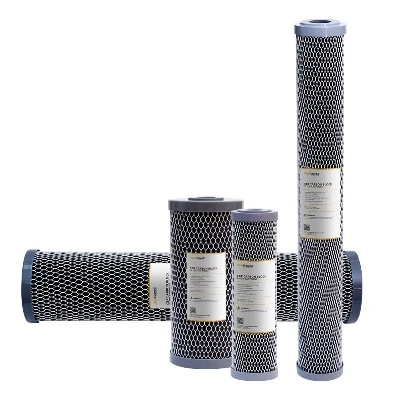
What is a Carbon Block Filter?
Carbon block filters are manufactured by compacting granular activated carbon under high pressure to form a solid filtration medium. This compression process creates an extraordinarily porous structure - just one pound of compressed carbon (equivalent to a standard 10-inch filter cartridge) possesses a surface area comparable to 160 acres of farmland, representing one of the most effective absorption materials available.
The densely packed structure of carbon block filters results in slower water flow rates compared to loose granular activated carbon (GAC) filters. Flow characteristics are directly influenced by the filter's micron rating, which is determined by the degree of carbon compression. Filters with smaller micron ratings provide finer filtration capability but correspondingly reduced flow rates.
How Often Should Carbon Filters Be Changed?
Reverse osmosis (RO) water purification systems require regular maintenance to ensure optimal performance. Both the pre-carbon filter and final polishing filter should undergo replacement every 6 to 12 months to maintain water quality standards. It's important to note that the actual service life of carbon filters may fluctuate depending on two key factors: the incoming water quality and the household's daily water consumption patterns.


