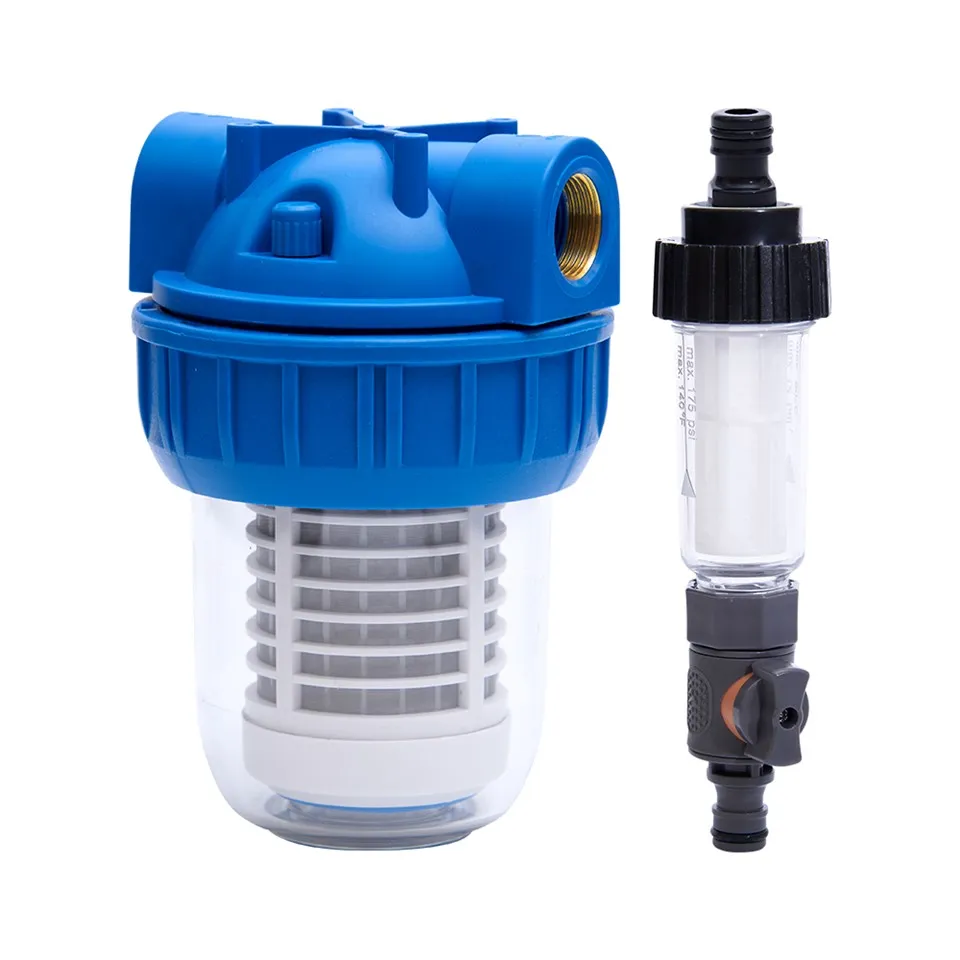
A Guide To Finding The Right Iron Filter For Well Water
Leave a message
Excess iron frequently affects well water supplies. Unlike regulated municipal water, private wells often contain elevated iron levels, necessitating whole-house filtration systems.
How Will You Know If You Have an Issue With Iron in Your Well Water?
Conducting regular water quality tests serves as the primary method for identifying potential iron concentration issues in your water supply. For households relying on well water systems, professional water testing should be performed at minimum once per year to monitor mineral content fluctuations.
Beyond quantitative measurements, elevated iron levels manifest through noticeable changes in water's organoleptic properties. According to research by the Water Quality Association (WQA), dissolved iron imparts a distinct metallic aftertaste and may cause reddish-brown discoloration. It's important to note that similar sensory alterations can result from various heavy metal contaminants including but not limited to: mercury (Hg), lead (Pb), copper (Cu), arsenic (As), manganese (Mn), and zinc (Zn). Comprehensive water analysis is therefore recommended to accurately diagnose the specific contaminant profile.
How Do Water Filtration Systems Work?
Home filtration systems for well water are available for treating water at the point of entry as well as at the point of use (such as reverse osmosis systems).
Point-of-entry options such as whole-house filtration systems generally work by using specific media and filtration processes to reduce contaminants such as iron, sulfur, arsenic and others. Whole-house systems can reduce the amount of iron found in water throughout your home, removing buildup, protecting water-using appliances and reducing staining in your sinks, tubs and laundry.
Reverse osmosis (RO) systems, which improve the quality and taste of your drinking water, typically start by propelling feed water through several filters, often including a sediment filter and carbon filter prior to the RO process. In the RO process, water is then forced through a semipermeable membrane, removing additional contaminants and dissolved minerals.
Explore Your Options for an Iron-Removing Filtration System Today
Well water requires regular testing. Users also have to be alert for signs of contamination or other problem water issues, like excessive iron levels. Often, filtration systems and softeners are required. Learn more about well water treatment options today.