

All You Need To Know About Activated Carbon For Water Filtration
Leave a message
Activated carbon is widely used across nearly every area of modern life. It plays important roles in fields ranging from cosmetics and medicine to agriculture, where it serves a variety of functions. In addition, activated carbon is an essential material in water filtration systems and is heavily relied upon in the water treatment industry. This article provides a detailed overview of activated carbon-what it is and how it functions.
Activated Carbon Explained
Activated carbon is derived from carbon-rich materials such as coal, coconut shells, bamboo, and wood. What distinguishes it from regular carbon is its network of tiny, low-volume pores that significantly expand its surface area. The production process involves treating the raw carbon with hot gases, which removes impurities and activates the material, resulting in its enhanced adsorption properties.
How Activated Carbon Works
Activated carbon's effectiveness stems primarily from its extensive surface area, which enables it to efficiently trap contaminants through physical adsorption. As polluted water passes through, impurities are drawn to the carbon's surface and accumulate within its microscopic pores. These pores function like parking spaces-earning carbon filters the nickname "contaminant parking lots." The size of these pores dictates the level of filtration: smaller pores result in finer filtration. Additionally, the duration of contact between water and the carbon surface influences purification-longer contact allows for more thorough contaminant removal. This is why optimal filtration is achieved using compact activated carbon filters under low pressure, which maximize interaction time.
The micron rating also plays a critical role, as it defines the size of particles that can be filtered out. Activated carbon blocks typically have pore sizes ranging from 0.5 to 10 microns. However, pores must not be excessively small, as this could hinder the flow of water molecules. The ideal pore size for balancing filtration efficiency and flow rate generally falls between 1 and 5 microns.
The Filtration Performance of Activated Carbon Filters
Activated carbon is highly effective at removing a wide range of water contaminants, including pesticides, bacteria, suspended solids, and heavy metals. Its performance depends largely on the quality of the carbon used in the filter. That said, even basic activated carbon filters can significantly reduce chlorine-a chemical commonly added during municipal water treatment that affects both taste and odor.
Substances like herbicides, pesticides, and chlorine can pose health risks when present in drinking water. Studies have shown that activated carbon is effective in filtering out 14 of the most prevalent pesticides, such as Lindane, Heptachlor, Glyphosate (Round-up), Chlordecone (CLD/Kepone), and Chlordane. It also removes 12 widely found herbicides, including Atrazine and 2,4-D.
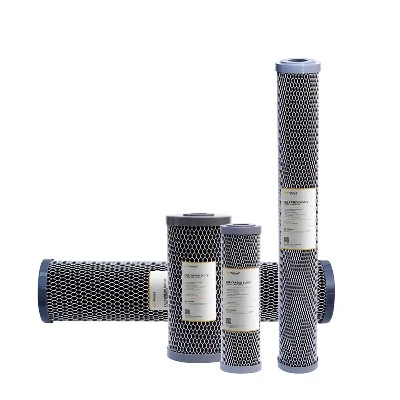
Activated carbon is a fundamental element in nearly every kind of water filtration system-from whole-house setups to refrigerator filters, faucet attachments, pitcher filters, and under-sink units. Its role is critical in eliminating contaminants and enhancing water's taste. Therefore, to benefit from an activated carbon filter, you'll need to select a water filtration system that incorporates one and aligns with your specific purification requirements.


